
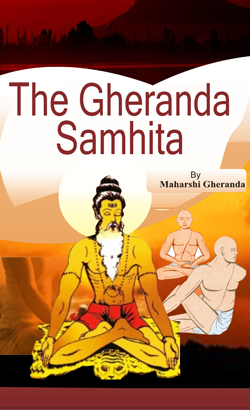
The Gheranda Samhita is one of the most important ancient texts on Hatha Yoga. It is a guide for those who want to purify their body and mind and achieve spiritual growth. This text is written in the form of a dialogue between Sage Gheranda and his student Chanda Kapali. Chanda asks questions about yoga, and Gheranda answers them with deep wisdom and simple steps.
While other yogic texts like the Hatha Yoga Pradipika focus more on physical postures and energy, the Gheranda Samhita is a complete manual. It teaches not just body exercises but also breathing, meditation, and moral discipline to help a person reach spiritual perfection.
The Gherand
The Gheranda Samhita is structured into seven chapters, with each chapter focusing on a key element of yoga.. Together, these seven parts are called the Saptasadhana, or the Seven Limbs of Yoga.
Chapter 1: Shatkarma – The Six Purifications
Gheranda says that before practicing yoga, a person must clean their body from the inside. This is called Shatkarma – the six purification techniques. These are:
1. Dhauti – Cleansing the stomach using by cloth or water.
2. Basti – Washing the intestines with water (like a yogic enema).
3. Neti – Cleaning the nasal passage using by water or a thread.
4. Nauli – Isolation and churning of abdominal muscles—stimulates digestion, balances doshas and nadis
5. Trataka – Concentrating the eyes on one object to improve focus.
6. Kapalabhati – A breathing technique to cleanse the lungs and mind.
These practices make the body pure, strong, and ready for further yoga. Nauli is a yoga technique that uses rhythmic abdominal rotations to activate and support healthy digestion
Please visit above Patanjali Yogsutra
Chapter 2: Asana – Postures
The second chapter is about Asanas or yoga postures. Gheranda describes 32 different postures. Each one has specific benefits like strength, balance, flexibility, and inner peace.
Some famous postures include:
Padmasana (Lotus Pose)
Siddhasana (Perfect Pose)
Vajrasana (Thunderbolt Pose)
Shavasana (Corpse Pose)
According to Gheranda, practicing these postures helps make the body firm, disease-free, and ready for long hours of meditation.
Chapter 3: Mudras – Energy Seals
In this chapter, Gheranda explains 25 Mudras. These are special physical gestures that help control the energy in the body. They include actions involving the hands, tongue, and other body parts.
Some important Mudras are:
Mula Bandha is the root lock technique used to harness and direct the energy of the lower body.
Uddiyana Bandha – Abdominal lock to control breath and digestion.
Jalandhara Bandha:
Jalandhara Bandha is the throat lock practice used to regulate pressure within the head and upper body.”
Khechari Mudra:
Khechari Mudra involves curling the tongue backward into the throat to aid in deep meditation and energy control.”
These Mudras help awaken the spiritual energy within us, known as Kundalini.
Chapter 4: Pratyahara – Withdrawing the Senses
This chapter talks about Pratyahara, which means taking your attention away from the outside world and turning it inward. It is like switching off your senses so that you can focus better during meditation.
Gheranda teaches five types of Pratyahara, which involve:
Detaching from sound, sight, smell, taste, and touch
Practicing mental focus
Learning to control desires and emotions
This practice helps calm the mind and prepares it for deep meditation.
Chapter 5: Pranayama – Breath Control
“Pranayama focuses on regulating the breath, which serves as a vital link between the body and the mind.”. Gheranda provides thorough guidance on performing Pranayama in a safe and effective manner.
He explains eight types of Pranayama, and each one has benefits like:
Improving concentration
Balancing emotions
Increasing energy
Purifying the mind
Some of the techniques include:
Nadi Shodhana (Alternate nostril breathing)
Bhastrika (Bellows breath)
Kumbhaka (Breath retention)
Chapter 6: Dhyana – Meditation
In this chapter, Sage Gheranda talks about the power of meditation. He says meditation is the path to realizing the true Self and achieving liberation.
Gheranda says one must first purify the body (through Shatkarma) before starting Pranayama, otherwise it may harm the body.
He recommends:
Sitting still in a comfortable posture
Focusing on a single object, like the image of a deity or the breath
Letting go of thoughts
Entering a deep state of silence
He describes two kinds of meditation:
Saguna Dhyana – Meditating on a form or with qualities (like a god or goddess).
Nirguna Dhyana -refers to meditation on the formless essence, focusing on pure, unmanifested consciousness.
Meditation, when done regularly, brings peace, joy, and spiritual wisdom.
Chapter 7: Samadhi – The State of Perfection
The final goal of yoga is Samadhi, a state where the mind becomes still and one experiences unity with the universe or God. Gheranda describes Samadhi as:
Total silence of the mind
Oneness with the soul
Freedom from suffering
Pure bliss
There are different levels of Samadhi, starting from deep concentration to complete spiritual union. In this state, the yogi transcends the cycle of birth and death, attaining spiritual liberation.
Unique Features of Gheranda Samhita:
It outlines seven stages of yoga, which differ from the eightfold path described by Patanjali.
Focuses a lot on body purification and strength before meditation.
It emphasizes the significance of consistent practice (abhyasa) along with inner and outer cleanliness (shuddhi)
Gives many physical techniques, but also explains the spiritual goals clearly.
Why Gheranda Samhita is Useful Today
Even though this book was written hundreds of years ago, its teachings are still very useful in today’s world. In modern life, we face stress, health problems, and emotional imbalance. The practices taught by Sage Gheranda offer simple but powerful tools to:
Keep the body fit and clean
Control the breath and calm the mind
Improve focus and remove negative thoughts
Discover inner peace and higher purpose
You don’t need to be a saint or a yogi living in the forest. Anyone – whether young or old, rich or poor – can benefit from this path. It only needs regular practice, patience, and faith.
For more ref you can visit https://www.yogapedia.com/definition/5289/gheranda-samhita